Ukulele Sizes Explained: Soprano, Concert, Tenor, and Baritone
Soprano, concert, tenor, or baritone? Learn how each ukulele size sounds, plays, and who it suits best before you buy.
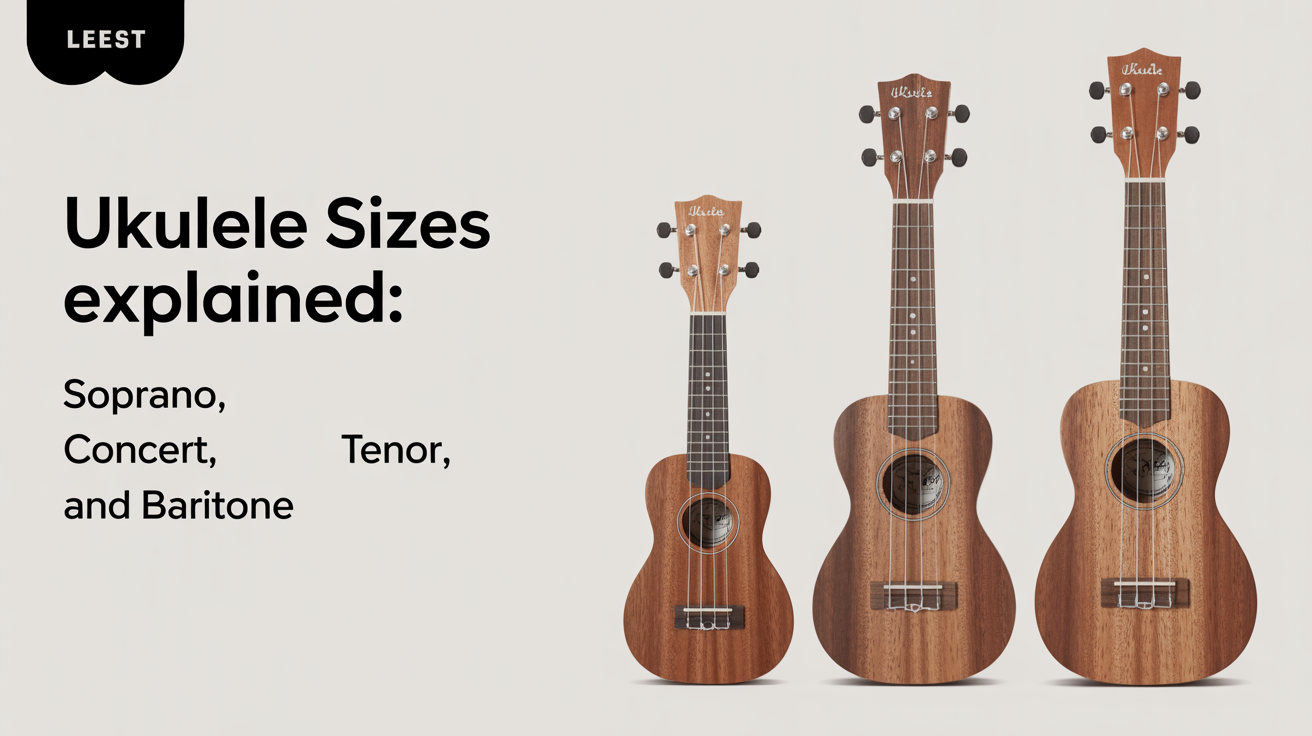
The four main ukulele sizes each have a distinct personality. Knowing the differences upfront saves you from buying a soprano and wishing it felt roomier, or picking up a baritone and wondering why it sounds nothing like the uke in that YouTube tutorial. Here is a plain-English breakdown of soprano, concert, tenor, and baritone so you can pick with confidence.
The Quick Comparison Table
Before diving into each size, here is how the four stack up side by side:
| Size | Total Length | Scale Length | Frets | Tuning | Sound & Feel |
|---|---|---|---|---|---|
| Soprano | ~21 in | ~13 in | 12–15 | gCEA | Bright, twangy, quintessential uke voice |
| Concert | ~23 in | ~15 in | 15–18 | gCEA | A little fuller, frets easier to navigate |
| Tenor | ~26 in | ~17 in | 17–19 | gCEA | Warm, projecting, popular with gigging players |
| Baritone | ~30 in | ~19 in | 18–21 | DGBE | Deep, guitar-adjacent, different from the others |
The soprano, concert, and tenor all share the same standard gCEA tuning, so chord shapes are identical across those three. The baritone breaks from that pattern entirely (more on that below).
Soprano: The Classic
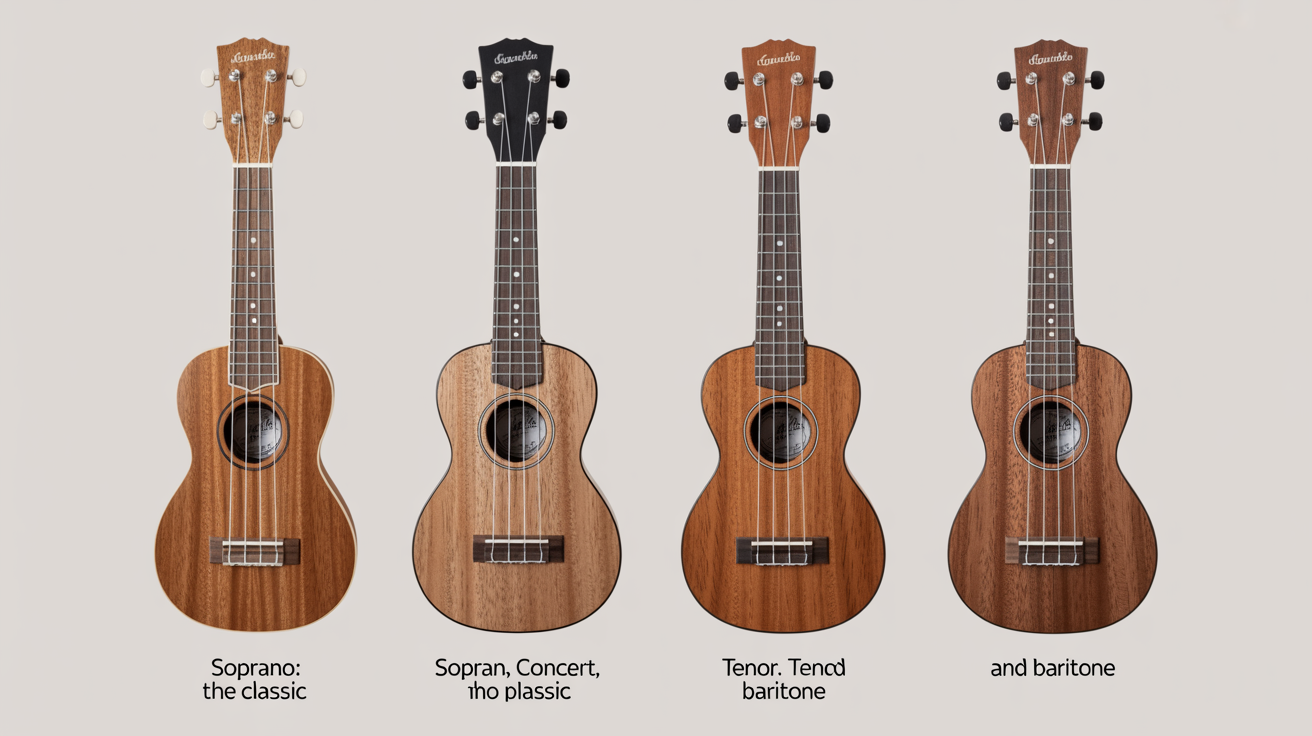
The soprano is the original ukulele size, and the sound most people picture when they think of the instrument. It is small, lightweight, and produces that bright, plucky tone you hear in vintage Hawaiian recordings.
The 13-inch scale length means the frets are closer together, which can feel cramped if you have larger hands. Beginners with smaller hands often find it perfectly comfortable, though. The compact body also makes it genuinely portable; it fits in a backpack without any drama.
One thing to know: sopranos are typically the loudest relative to their body size, projecting that high, sweet tone well in a quiet room. If the classic uke sound is what drew you to the instrument in the first place, a soprano delivers it in its purest form.
Who It Suits
Soprano works best for players with small to average-sized hands, anyone who prioritizes portability, or anyone chasing that bright, cheerful Hawaiian sound. If you have been strumming along to old ukulele clips and love exactly what you hear, a soprano is probably the right call.
Concert: A Comfortable Middle Ground
The concert ukulele is about two inches longer than the soprano, and that difference adds up in meaningful ways. The frets are slightly more spread out, which many beginners find easier to press cleanly, especially on the higher positions. The body produces a bit more volume and a slightly rounder tone without losing that signature uke brightness.
A concert is one of the most common recommendations for adult beginners, and with good reason. It is not so large that it feels unwieldy, and not so small that big fingers get tangled up. The tuning is the same gCEA as a soprano, so any chord chart or tutorial you follow will transfer directly.
If you are learning the basics of the instrument for the first time, starting on a concert often means fewer frustrations with finger placement, which helps early momentum.
Who It Suits
Concert is a strong default for most adult beginners, especially those with average to larger hands. It is also a natural upgrade for soprano players who want a bit more room without changing tuning or learning new chord shapes.
Tenor: Fuller Sound, More Room
The tenor sits at around 26 inches total, with a scale length of about 17 inches. That extra length and larger body cavity produce noticeably more warmth and sustain. Notes ring longer. Chords sound fuller. Players who fingerpick or play melody lines often gravitate toward tenor because individual notes have more presence.
Many professional ukulele players use tenors as their main instrument. The fret spacing is generous enough that players coming from guitar sometimes feel right at home. Tuning is still standard gCEA, so you can follow the same lessons and chord charts as soprano and concert players.
Tenors can also be strung with a low G instead of the re-entrant high G that comes standard, which gives the instrument an even more guitar-like range. That is an optional modification, not the default. It is worth knowing the option exists if you want a broader sonic palette later.
Understanding the parts of a ukulele before you buy helps you evaluate any size you pick up in a shop, so you know what you are looking at and touching.
Who It Suits
Tenor suits players who want more volume, a warmer tone, or easy fret access. Guitarists making the jump to ukulele often prefer it. If you plan to play out or record, the tenor's projection is genuinely useful.
Baritone: The Outlier
The baritone is where the ukulele family takes a sharp left turn. At around 30 inches total, it is the largest of the four sizes. More importantly, it is tuned DGBE, the same as the four highest strings on a standard guitar. That single fact changes the whole experience.
Because of the different tuning, chord shapes you learn on a soprano, concert, or tenor will not transfer to baritone. A C chord on a gCEA instrument is a G chord on a baritone. If your goal is to eventually play alongside other ukulele players or follow standard uke tutorials, starting on a baritone makes that harder.
The flip side is that baritone is an excellent bridge for guitarists who want to try the ukulele. If you already know guitar chord shapes, you can pick up a baritone and play immediately using what you know.
The sound is deeper and mellower than the other sizes. It is still clearly a stringed instrument with nylon or fluorocarbon strings, but the voice is closer to a classical guitar than to a soprano uke.
Who It Suits
Baritone is best for guitarists who want ukulele playability without relearning chords, or for players who specifically want a deeper, more mellow tone. It is not the recommended starting point if you are new to stringed instruments and want to learn ukulele as most people understand it.
How to Choose the Right Size
A few practical questions help narrow it down fast.
Hand size matters, but less than people think. Soprano is tight for large hands, but concert and tenor handle most hand sizes comfortably. Try gripping around a concert neck in a shop. If your fingers feel hopelessly jammed, step up to tenor.
Match your goals to the sound. If you want that bright, classic uke tone for casual playing, soprano or concert. If you want something that can hold its own in a louder room or sounds rich when you play fingerstyle, tenor. If you play guitar already and want quick wins, baritone.
Think about where you will play. Soprano and concert fit easily in small spaces and travel well. Tenor is still highly portable, just noticeably larger. Baritone is the bulkiest of the four; it still qualifies as a ukulele, but it needs a bigger bag.
Stick to the gCEA family for learning resources. Almost every beginner tutorial, chord chart, and online lesson is written for gCEA tuning. Unless you have a specific reason for baritone, soprano through tenor all share one consistent learning ecosystem.
Making sure you know how to hold your ukulele correctly applies to every size, though ergonomics shift slightly as the body gets larger. Tenor players often rest the body further up the forearm; soprano players tuck it in close.
FAQ
Can I learn on a soprano if I have large hands?
Many players do. The frets are close together, so forming clean chords takes more precision, but it is not impossible. If you find yourself consistently buzzing notes or struggling to press cleanly after a few weeks of practice, trying a concert or tenor is a reasonable next step. Some people find they adjust quickly; others really do need the extra spacing.
Do all four sizes use the same strings?
No. Soprano, concert, and tenor strings are sized differently even though they share gCEA tuning. Baritone uses longer strings tuned to DGBE. You cannot swap strings between sizes. Always buy strings labeled for your specific size and tuning.
Is a concert really better for beginners than a soprano?
"Better" depends on your hands and goals. Concert is the most commonly recommended beginner size for adults because the fret spacing reduces some early frustration. But soprano is the classic, and plenty of beginners start there with no issues. Neither choice is wrong. If you can try both in a shop, do it — the one that feels comfortable in your hands is the right one.
Does a bigger ukulele mean it is louder?
Generally, yes. A larger body moves more air and tends to project more. Tenor is louder than concert, which is louder than soprano. That said, build quality and tonewoods affect volume and tone more than size alone. A well-made soprano from a reputable luthier can easily outproject a cheap tenor.
Can I switch sizes later without starting over?
If you stay within the gCEA family (soprano, concert, or tenor), the transition is smooth. Chord shapes are identical; you are just adjusting to different fret spacing and a different feel under your hands. Moving to or from baritone is a bigger adjustment because the tuning is different and chord shapes do not transfer directly.