Should You Buy a Ukulele Online or In Store?
Weigh the real pros and cons of buying a ukulele online vs in store so you can make a confident first purchase.
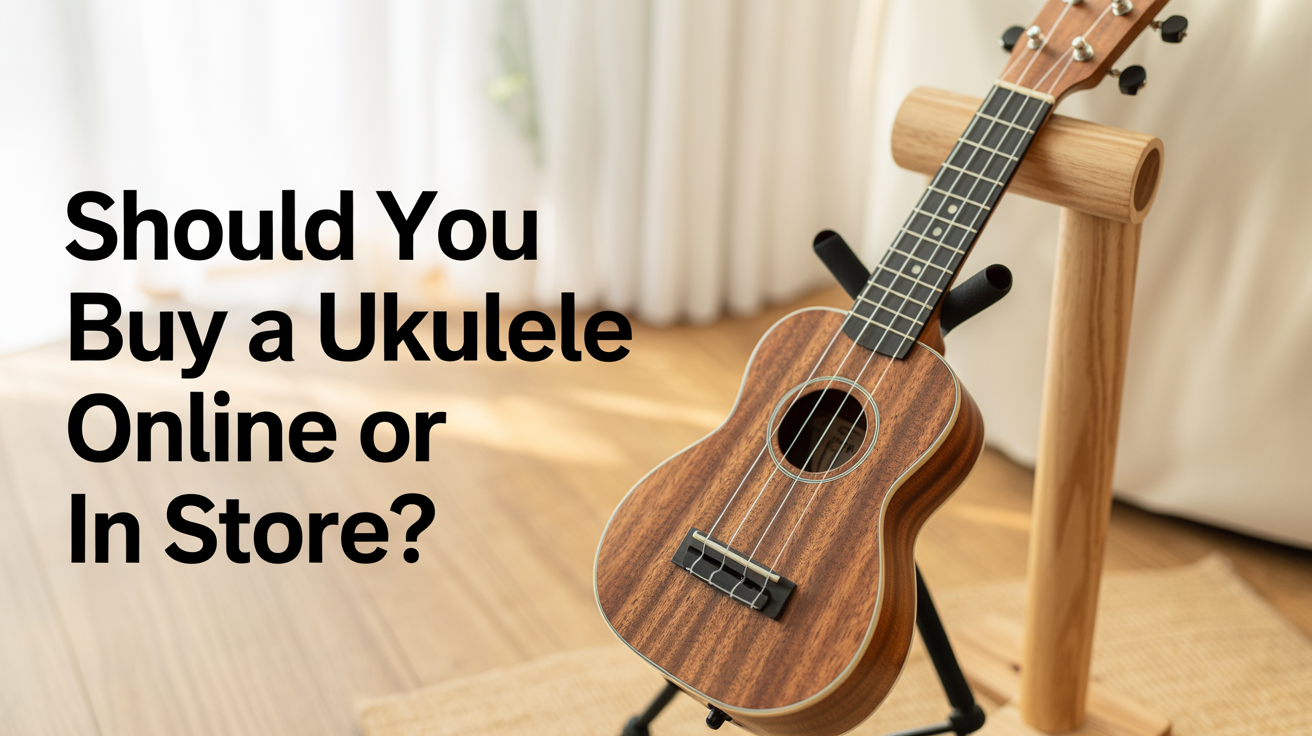
Neither option is automatically the right one. Buying in a local shop gives you hands-on information that no photo can replace. Shopping online gives you access to far more instruments at a wider range of prices. Both paths lead to perfectly fine first ukuleles every day. What matters is knowing what each route can and can't offer so you don't end up disappointed.
This guide walks through both options honestly, including a head-to-head comparison and a practical middle path that a lot of beginners find works best.
What You Get From a Physical Music Store
Walking into a store and actually holding several ukuleles is genuinely useful when you're new to the instrument. You learn things quickly that are hard to absorb from a product listing.
You Can Feel the Size Difference
Soprano, concert, tenor: these aren't just abstract labels. The body sizes feel noticeably different in your hands, and what looks compact in a photo can surprise you in person. If you have larger hands, a soprano might feel cramped. If you're buying for a child, a concert might be more than they can comfortably reach around. Fifteen minutes in a shop answers the size question for good. See our guide on how to choose your first ukulele for more on sizing.
You Can Check the Setup
"Action" refers to the gap between the strings and the fretboard. Too high, and pressing chords down hurts your fingertips and the instrument sounds slightly sharp when fretted. You can check this by looking down the neck from the headstock: the strings should sit close to the frets without buzzing. A shop assistant can show you what to look for and often adjust the action before you leave. That's a real service that doesn't come with most mail packages.
You Can Hear It Unplugged
Acoustic ukuleles vary in tone even within the same price range. The wood combination, the bracing, the nut material: all of it affects sound. Strumming a few in the shop and comparing them takes about five minutes, and you'll probably have a clear favorite. That's a level of certainty that no audio sample on a product page can match.
The Downsides of Buying In Store
Honest picture: not every city has a good music shop. Many general instrument stores stock only a handful of ukuleles, often at a narrow price range. The selection can be thin. And some shops do price their instruments higher than online retailers, though not dramatically so on budget models. If the nearest music shop is two hours away, the in-store advantage shrinks considerably.
What You Get From Buying Online
The online market for ukuleles is enormous. You can browse hundreds of instruments across dozens of brands, read verified buyer reviews, and often pay less than you would at retail. For a beginner trying to figure out how much to spend, comparing prices side by side is much easier online.
Wider Selection and Easy Price Comparison
Online, you're not limited to what a single shop happens to stock. You can filter by size, tonewood, or budget. You can read what actual buyers say about playability after a few months of practice. That crowd-sourced feedback is useful, especially for budget instruments where quality control can vary from batch to batch.
The Real Risks of Buying Sight Unseen
A ukulele can sit in a warehouse or shipping container long enough that the humidity difference between there and your home causes the wood to shift. Bridges can develop slight lifts. Seams can open slightly. The action might be set too high from the factory. None of this is guaranteed, and plenty of online orders arrive in perfect shape, but it's more common than manufacturers like to advertise.
You also can't hear it before it arrives. You might receive an instrument that sounds a bit dull or ringy and have no easy baseline for comparison. And if the setup is off, you'll either need to find a local shop to adjust it or learn to do it yourself.
The fix: buy from a retailer with a clear, no-hassle return window (30 days is standard and reasonable) and check whether they do a basic setup inspection before shipping. Some online sellers do; it's worth asking or checking their FAQ.
Online vs In Store: A Side-by-Side Look
| Factor | In Store | Online |
|---|---|---|
| Try before you buy | Yes: play it before paying | No: you're deciding from photos and specs |
| Selection | Limited to what's in stock | Huge range of brands and models |
| Pricing | Sometimes higher, but not always | Often competitive; easy to compare |
| Setup quality check | Staff can inspect and adjust on the spot | Varies by seller; some include pre-ship setup |
| Shipping/humidity risk | None | Possible, especially in extreme climates |
| Return process | Walk back in | Ship it back; depends on seller policy |
| Personalized advice | Yes, from a human | Reviews + product descriptions only |
| Convenience | Requires travel | Delivered to your door |
The Middle Path Most Beginners Don't Think of
Go to a shop to figure out what size you want and what feels comfortable to hold. You don't have to buy there. Spend half an hour playing a soprano, a concert, and if they have one, a tenor. Notice which size feels natural. Ask the staff any questions you have about tonewoods or strings. Then, if the store has what you want at a fair price, buy it. If not, you'll shop online with real information instead of guesses.
This approach costs you nothing but the trip. You leave knowing your preferred size, having a feel for the action you like, and having some idea of tone. That knowledge makes online shopping significantly safer.
If you do buy online, look for instruments that mention a "solid top" at the entry level, as they tend to sound better than all-laminate builds. The difference between laminate and solid wood is worth understanding before you commit to a specific model.
After You Buy: The First Things to Do
Regardless of where your ukulele comes from, a few steps are the same.
Get a clip-on tuner. Ukuleles go out of tune constantly when new because the nylon strings are still stretching. Standard tuning is gCEA (from the string closest to your chin downward). A clip-on tuner clips to the headstock and reads vibrations directly, which means it works even in a noisy room. Tune before every practice session for the first few weeks.
Check the action. Hold the ukulele up to eye level and sight down the neck. The strings should hover close to the frets (roughly the thickness of a business card at the first fret is a reasonable benchmark). If they're noticeably higher, the nut or saddle may need filing. A local shop can do this for a small fee if you didn't buy from them originally; most are happy to help with a setup job regardless.
Play it within the return window. Don't let the box sit in a corner. Play it on day one so you have time to return it if something is clearly wrong: a persistent buzz, a seam that's lifting, a tuning peg that slips immediately. Most issues show up within the first few sessions.
FAQ
Is it safe to buy a ukulele from a major online marketplace?
Generally yes, especially if you buy from established sellers with strong feedback scores and a return policy. Read recent reviews specifically about build quality and setup. Avoid listings with stock photos only and no seller-specific reviews.
Do I need a professional setup for a beginner ukulele?
Not necessarily, but it helps. A setup (action adjustment, nut slot filing, sometimes a fret level) makes any instrument play more easily and sound better in tune. If your ukulele arrives and basic chords feel unusually hard to press, or notes sound sharp when fretted, a setup is worth the cost. It's typically an affordable service at most music shops.
What if I live somewhere without a music store nearby?
Buy online from a seller with a clear return policy and pre-ship inspection if available. Prioritize sellers who specialize in ukuleles rather than general instrument retailers. They tend to be more knowledgeable about setup and more willing to answer pre-purchase questions by email or phone.
Can I negotiate price in a physical store?
Sometimes, especially on instruments that have been on the floor for a while. It doesn't hurt to ask if they can include a set of spare strings or a gig bag. Online prices are generally fixed, though sales happen frequently around major shopping seasons.
Should I buy a bundle (ukulele + accessories) or just the instrument?
Bundles are usually good value for beginners. A case or gig bag, a clip-on tuner, and a strap are things you'll want anyway. Check what's in the bundle first, since some include accessories of genuinely poor quality that you'd replace quickly. If the included tuner is a clip-on chromatic model, it's probably fine. If it's a pitch pipe, skip the bundle and buy the parts separately.