Laminate vs Solid Wood Ukuleles: What's the Difference?
Laminate ukuleles are cheaper and more durable; solid wood sounds richer. Here's how to pick the right build for where you are as a player.
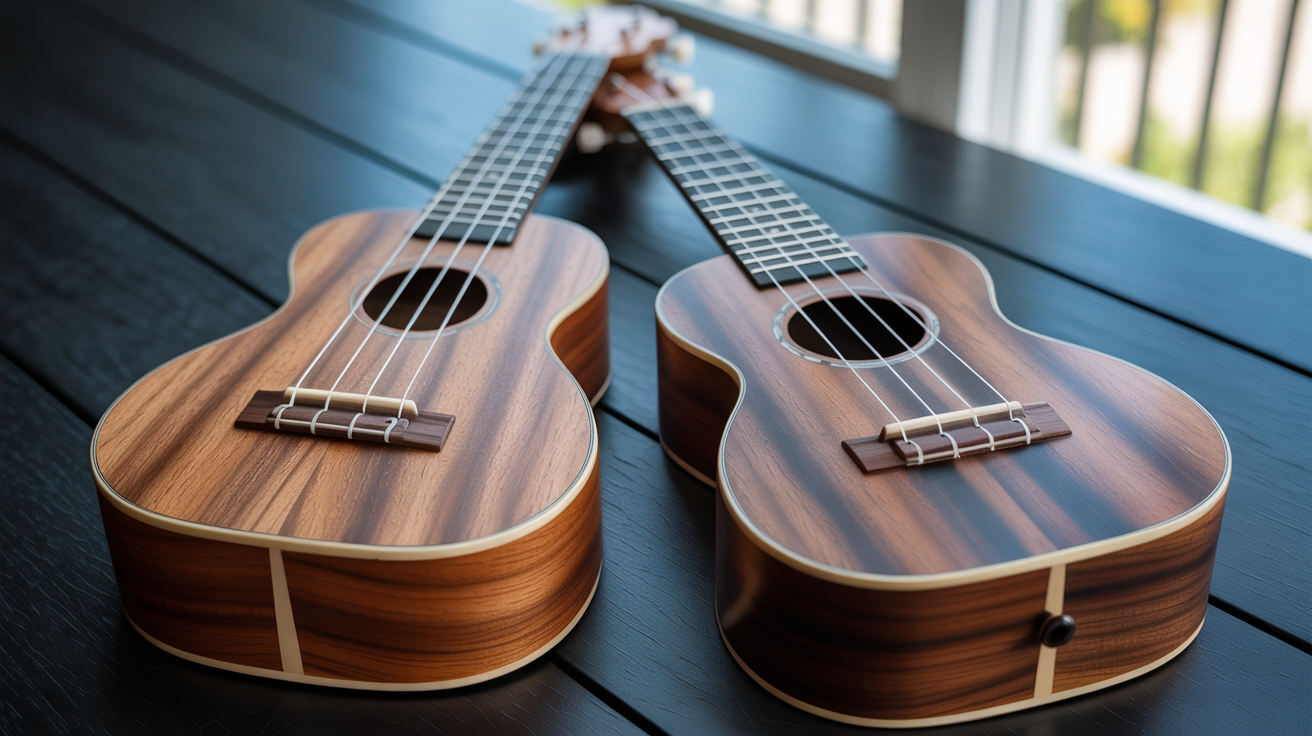
Walk into any music shop or scroll through an online listing and you'll quickly notice that ukulele descriptions throw around words like "solid mahogany top" or "laminate spruce" without much explanation. The short version: laminate ukuleles are built from thin layers of compressed wood, while solid wood ukuleles use single pieces. That difference shapes the price, the sound, and how much care the instrument needs. Here's what actually matters for a beginner.
What "Laminate" Means (and Why It's Not a Bad Word)
Laminate wood is made by bonding multiple thin layers of real wood together under heat and pressure, similar to how plywood works. The outer layer, the one you see, is genuine wood veneer, so a laminate ukulele can still be beautiful. The layers underneath are typically a different, less expensive wood.
The result is a body that's structurally stable and resistant to humidity swings. This matters more than it sounds. Wood expands and contracts with changes in moisture, and a solid wood instrument can crack if it dries out too much. A laminate uke shrugs off a car trunk in winter or a beach trip in summer without complaint. If you're going to leave it in the backseat, hand it to a kid, or take it camping, laminate is genuinely the smarter choice.
How Laminate Affects Tone
Acoustic instruments produce sound by vibrating. The more freely a top can move, the more complex and resonant the tone. Because laminate is denser and stiffer than a solid piece of wood, it vibrates less freely. The sound is still pleasant, beginners often can't hear much difference through a cheap speaker or in a noisy room, but side by side with a solid wood uke of the same size, the laminate typically sounds a little flatter and less lively.
For someone learning chords and strumming for the first time, that difference is nearly irrelevant. You're not recording an album yet. You're building muscle memory and learning songs, and a laminate ukulele does that job just as well.
What "Solid Wood" Means
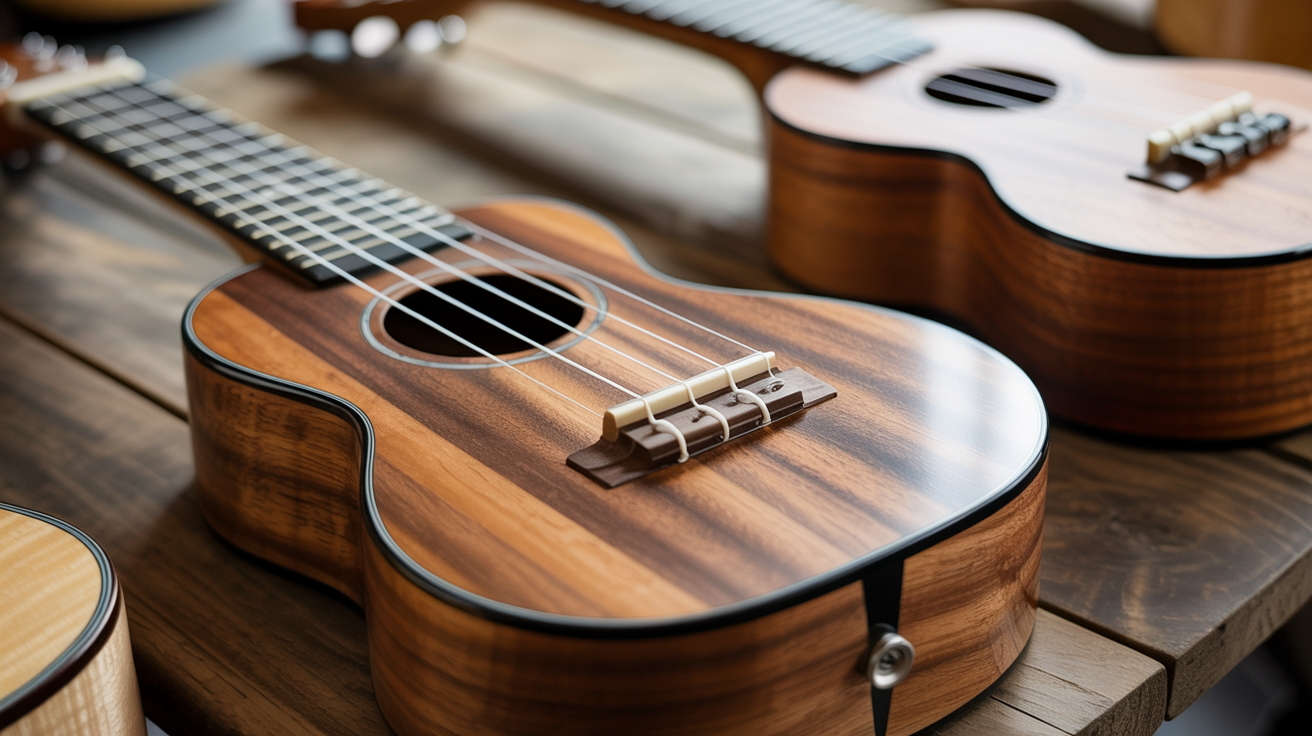
A solid wood ukulele is made from actual planks of wood, no layering. "Solid top" is the most common entry point into this category: the face (top) of the instrument is solid wood, while the back and sides are still laminate. A fully solid instrument uses solid wood throughout.
Solid tops resonate more freely, which gives the sound more warmth and sustain. Many players also describe a solid wood uke as "opening up" over years of play, the wood fibers loosen slightly as they're repeatedly vibrated, and the tone genuinely improves. A laminate uke doesn't do this.
The Trade-offs
The extra resonance comes at a cost. Solid wood is more sensitive to the environment. Let it sit in a very dry room for too long and the top can develop hairline cracks. Most solid wood ukulele owners keep a small humidifier in the case (a basic one costs a few dollars) and avoid leaving the instrument in hot cars. It's not a huge burden, but it's a real one.
Solid wood instruments also cost more, because the wood has to be carefully graded and the construction is less forgiving of imperfections. Solid-top ukuleles start around the $150–$250 range for reputable brands; fully solid instruments tend to run $300 and up. See how much you should spend on a beginner ukulele for a breakdown of what different price points actually buy you.
Laminate vs Solid Wood: A Quick Comparison
| Feature | Laminate | Solid Wood |
|---|---|---|
| Price range | Budget to mid ($50–$150) | Mid to high ($150–$500+) |
| Tone | Clear but flatter; less sustain | Richer, warmer, more resonant |
| Humidity sensitivity | Very forgiving | Needs humidity management |
| Durability for travel/knocks | Excellent | More care needed |
| Improves with age? | No | Yes, especially the top |
| Best for | Beginners, travelers, kids | Advancing players, home practice |
A solid-top with laminate back and sides sits in the middle: better tone than full laminate, more affordable than fully solid, and slightly less demanding than an all-solid instrument. For many players moving past the complete beginner stage, it's the sweet spot.
Ukulele Tonewoods Explained
The species of wood used matters too, though perhaps less than the laminate-versus-solid distinction at the beginner level. Here are the most common ones you'll encounter:
Mahogany is warm and mellow with a slight mid-range emphasis. It's one of the most popular tonewoods for ukuleles and works well for both strumming and fingerpicking. Most entry-level instruments use mahogany or a mahogany-look laminate.
Koa is the traditional Hawaiian ukulele wood, bright, punchy, and distinctive looking with its figured grain. Solid koa instruments tend to be expensive. Koa laminate is more accessible and still captures some of that characteristic brightness.
Spruce has a crisp, bright tone that projects well. You'll find it mainly on the tops of ukuleles designed for fingerstyle playing. It's harder and lighter than mahogany.
Cedar is softer than spruce and responds to a lighter touch, producing a rounder sound. Some players find it more forgiving at lower volumes.
Here's the important caveat: tonewoods make a real difference on high-quality instruments played by experienced musicians. On a laminate beginner uke, the construction quality, nut and saddle fit, and string setup will affect your playing experience more than the wood species. Don't get too caught up in tonewood comparisons until you're buying your second or third uke.
Which One Should You Buy?
If you're just starting out and haven't played before, a well-made laminate ukulele is genuinely the right first instrument for most people. It's lower stakes, you're not committing hundreds of dollars before you know whether you'll stick with it, and it won't punish you for storing it imperfectly or taking it on a trip.
Once you've been playing consistently for six months to a year and you know the instrument has its hooks in you, a solid-top ukulele makes a noticeable difference. You'll be able to hear the improvement, and you'll care more about maintaining the instrument properly.
If budget isn't a concern from day one, a solid-top with laminate back and sides is a reasonable starting point. You get better tone without the full humidity anxiety of an all-solid instrument.
For more guidance on narrowing down your options, how to choose your first ukulele covers size, tuning (standard gCEA tuning works for almost everyone starting out), and what to look for in terms of build quality. And once you have an instrument, ukulele accessories every beginner actually needs will help you set up for day one.
FAQ
Is a laminate ukulele good enough for a beginner?
Absolutely. Most ukulele teachers recommend laminate instruments for new players. They're durable, affordable, and stay in tune reasonably well. The tonal difference compared to solid wood is real, but it won't hold back your learning at all.
What is a solid-top ukulele?
A solid-top ukulele has a face (the front of the body) made from a single piece of wood rather than compressed layers. The back and sides are usually still laminate. This gives you some of the tonal warmth of solid wood at a lower price point than a fully solid instrument.
Do I need to humidify a laminate ukulele?
Generally no. Laminate instruments are much less sensitive to humidity than solid wood ones. If you live somewhere extremely dry, it's not a bad idea to keep any instrument away from heating vents and direct sunlight, but laminate ukuleles don't require a dedicated humidifier the way solid wood instruments do.
Will a solid wood ukulele really sound better over time?
Yes, there's a real phenomenon called "playing in" where the wood fibers loosen slightly from repeated vibration and the tone becomes more resonant. It's gradual, you're talking years, not months, but experienced players consistently report it. Laminate instruments don't meaningfully change in this way because the compressed structure dampens that kind of movement.
Does the wood species matter more than laminate vs solid?
At the beginner level, no. The laminate-versus-solid construction has a bigger impact on tone than whether the laminate is mahogany or koa. What matters most for a new player is action (string height), intonation, and build quality, a well-set-up laminate mahogany uke will be more enjoyable to play than a poorly set-up solid koa one.