How to Choose Your First Ukulele
A plain-spoken first ukulele buying guide: size, materials, budget, and what actually matters as a beginner.
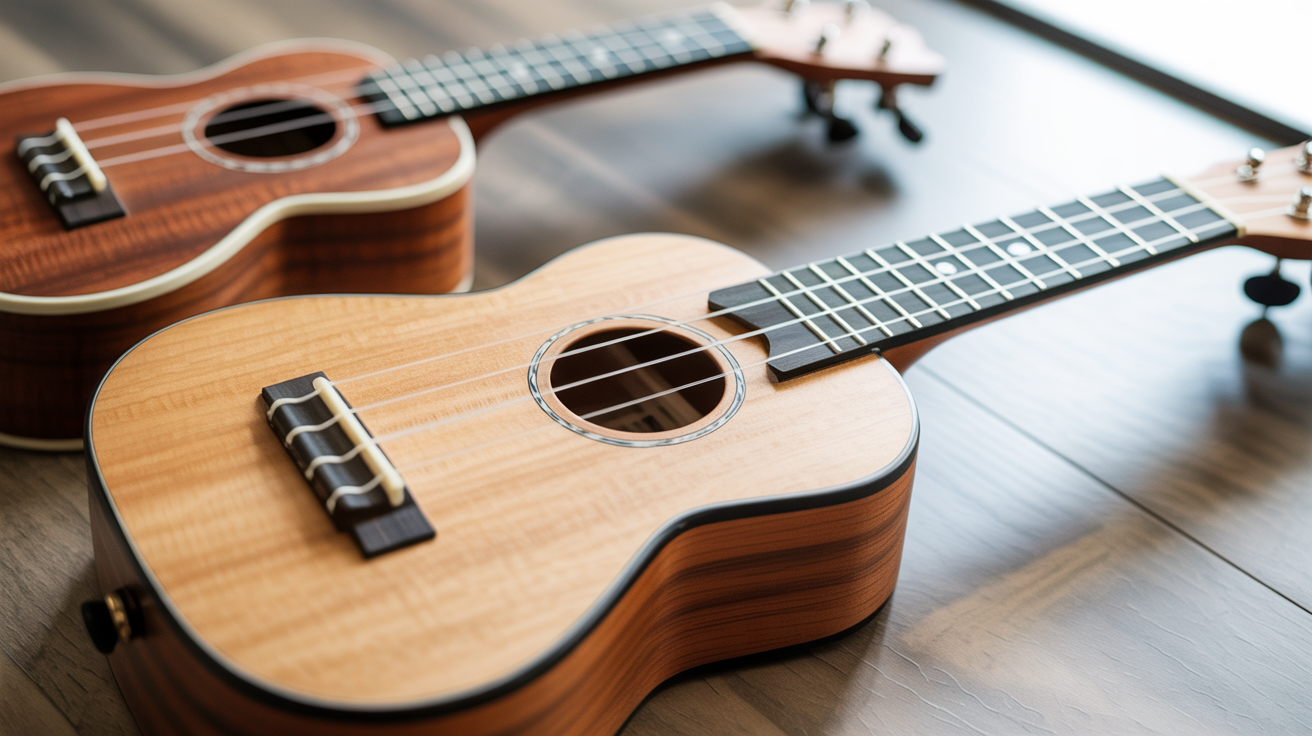
Picking your first ukulele does not have to be complicated. Most beginners do fine with a concert or soprano in the $60–$150 range, made from laminate tonewoods, and that is genuinely good advice, not a placeholder. This guide walks you through the decisions that actually matter so you can buy once, start playing, and not second-guess yourself.
Size: The Choice That Affects Everything Else
Ukuleles come in four main sizes. Each plays and sounds a little differently, and the one you choose will shape how comfortable your first few weeks of practice feel.
Soprano is the smallest and the one people picture when they think "ukulele." It has a bright, traditional sound, a narrow fretboard, and a compact body. Because the frets are closely spaced, players with larger hands sometimes find chord shapes awkward. Plenty of adult beginners start here and never look back. It really depends on your hands and how the instrument feels when you hold it.
Concert sits one step up. The body is slightly larger, the fretboard a little wider, and the frets a touch farther apart. This extra room makes it a natural fit for adults, and the tone is a bit fuller than a soprano without straying far from that classic ukulele sound. For most beginners, concert is the sweet spot.
Tenor is bigger still and increasingly popular. It projects more volume, has a warmer low end, and gives even more fretboard room. Many intermediate and advanced players gravitate here because it handles fingerpicking well. As a starting point it works fine, though the larger body can feel unwieldy for younger players or people with shorter arms.
Baritone is the outlier. It is tuned like the top four strings of a guitar (DGBE), not in the standard gCEA tuning shared by soprano, concert, and tenor. If you already play guitar, this can be an interesting bridge instrument, but for a true first uke, most teachers recommend sticking with one of the other three so you learn standard ukulele tuning from the start.
A quick rule of thumb
If you are buying for a child under ten, soprano. For most adults and teens, concert. If you love a big sound and have large hands, tenor. Skip the baritone unless you have a specific reason to choose it.
Standard Tuning and Why It Matters
Standard ukulele tuning is gCEA: G, C, E, A from the fourth string to the first. The G string is tuned high (above the C), not low like you might expect. This re-entrant tuning is part of what gives the ukulele its signature bright, cheerful sound. When you buy your first instrument, check that it ships with a tuner or pick one up separately, because you cannot play in tune on an out-of-tune uke, and new strings go sharp and flat quickly until they settle in.
A clip-on tuner is inexpensive and worth buying alongside your instrument. You can find more on the accessories that actually earn their place in ukulele accessories every beginner actually needs.
Laminate vs. Solid Wood: What Beginners Should Know
Walk into any music shop and you will notice a wide spread of prices. A lot of that gap comes down to whether the top, back, and sides are made from laminate (thin layers of wood pressed together) or solid wood (a single piece of the real thing).
Laminate is what most beginner instruments use, and for good reason. It is more resistant to changes in humidity and temperature, which matters if you live somewhere dry or plan to leave your uke in a car now and then. It is also more affordable. The sound is perfectly good for learning: crisp, clear, and consistent. Most new players cannot hear the difference between laminate and solid wood anyway, and even if they could, it would not help them learn chords any faster.
Solid wood instruments sound richer. The top vibrates more freely and the tone opens up as the wood plays in over time. A solid-top uke at a reasonable price is not unheard of, and if the budget allows, it can be a worthwhile upgrade. But a solid-wood uke that has not been properly set up will play worse than a well-made laminate, so build quality matters more than the material alone.
The short version: laminate is completely fine to start on, and you will not be held back by it. For a deeper comparison of how these two materials differ in practice, see laminate vs. solid wood ukuleles: what's the difference.
What to Look For in a First Ukulele (Build Quality Checklist)
Brand names get a lot of attention in buying guides, but build quality markers are more useful. Here is what to check before you commit:
- Action: the gap between the strings and the fretboard. High action makes pressing notes painful and intonation goes off up the neck. If the strings sit very far from the frets, the uke may need a setup (or may not be worth the trouble at a low price point).
- Tuning pegs: friction tuners (the pegs that stick straight out of the headstock) are common on sopranos. Geared tuners hold pitch better and are easier to adjust precisely. Either works; geared is more beginner-friendly.
- Fret ends: run your thumb along the edge of the neck. Sharp, protruding fret ends suggest rougher construction and can make playing uncomfortable over time.
- Neck join: look at where the neck meets the body. There should be no visible gaps or cracked finish.
- Intonation: if you can, play a note at the 12th fret and compare it to the open string. They should be an octave apart. A big discrepancy means the scale length or nut/saddle placement is off.
You are unlikely to get every box checked on a very cheap instrument. Aim for the best you can reasonably afford, and do not be afraid to spend a bit more if it means a sturdier, better-playing uke.
How Much Should You Spend?
There is no single right answer, but there are sensible guardrails. Instruments below around $40 tend to have real build-quality problems: fret buzz, poor intonation, tuning pegs that slip constantly. These issues make learning frustrating and can mislead beginners into thinking they are doing something wrong.
The $60–$150 range covers a lot of genuinely good beginner instruments. You get decent hardware, a properly cut nut and saddle, and a playable setup out of the box (though a quick checkup at a music shop never hurts). Spending more than $200 as a first-time buyer is not necessary unless you want to invest in something you will keep for years.
If budget is a real concern, buying a used instrument from a reputable local music shop (one that has inspected and set it up) often gets you more quality per dollar than a new instrument at the same price. For a full breakdown of where the price tiers fall and what you actually get in each, how much should you spend on a beginner ukulele goes into the details.
A Few Things You Can Skip at First
The ukulele market is full of bundles, starter kits, and accessories marketed as essentials. Some are worth it; a lot are not. Here is what new players tend to overbuy:
- Fancy straps: useful later, not critical on day one. A uke is light enough to hold comfortably without one.
- Multiple sets of strings: your instrument almost certainly ships with strings already on it. Let them break in before you buy replacements.
- Electronic tuners built into bundles: a $10–$15 clip-on chromatic tuner does the job. You do not need anything fancier.
- Premium cases: a basic gig bag is all you need to keep your uke safe around the house and on short trips. A hard case makes sense later if you travel frequently.
Focus on one good instrument, a clip-on tuner, and a gig bag. Everything else can wait until you know what you actually need.
FAQ
Does the color or finish affect the sound?
No. The color of an instrument is purely cosmetic. Glossy finishes very slightly dampen vibration on a solid-wood instrument (a point debated among tone nerds), but on a laminate starter uke it makes zero audible difference. Pick whatever you find appealing — you are going to look at it every time you practice.
Can kids and adults use the same ukulele?
Often yes, especially with a concert. Younger children (under eight or so) might find a soprano more comfortable because it is lighter and the scale length is shorter. Many families buy a single concert and everyone learns on it. The main consideration is whether the child can reach comfortably across the fretboard without straining.
Is a beginner bundle worth buying?
Bundles that include a gig bag and tuner are often good value because those are the two accessories you genuinely need on day one. Bundles that include songbooks, picks, polish kits, and online course codes tend to pad the price with things you may never use. Assess the bundle by the quality of the instrument itself; the extras are secondary.
Should I buy online or from a local music shop?
A local shop lets you hold the instrument, hear it, and have someone check the setup before you leave. That is a real advantage for a first purchase. Online buying is fine if you know what you are looking for or if local options are limited — just make sure there is a return policy in case the action is too high or the tuners are slipping.
Do I need a specific ukulele for a particular style of music?
Not as a beginner. The soprano, concert, and tenor all handle strumming, fingerpicking, and chord melody well. Style-specific preferences (low G vs. high G strings, for instance) are worth exploring once you have a feel for the instrument. Start with standard tuning on a size that fits your hands, and let your taste develop from there.