Is the Ukulele Easy to Learn? What Beginners Should Expect
Find out how quickly most beginners pick up the ukulele, how it compares to guitar, and what to realistically expect in your first few weeks.
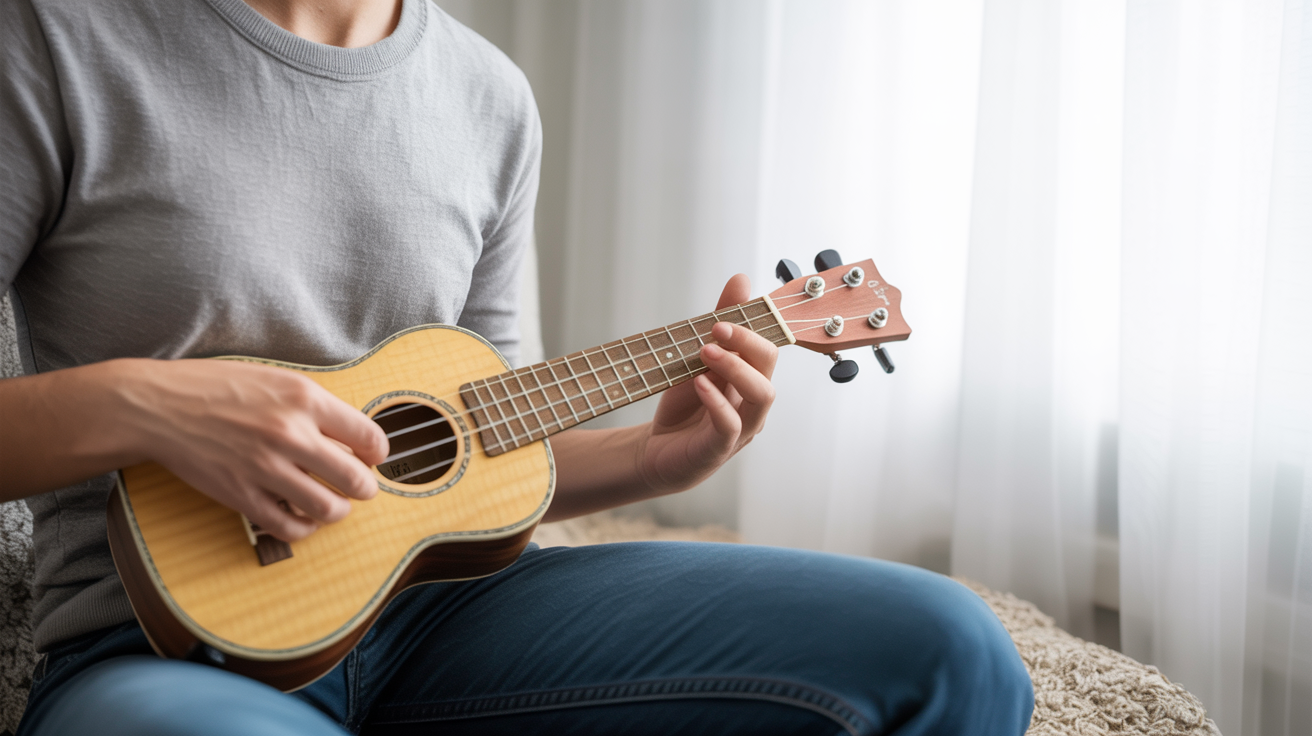
The short answer is yes, the ukulele is one of the friendlier instruments a beginner can choose. But "easy" is relative, and it helps to know exactly what you are getting into before you buy one. Here is an honest look at the learning curve and what you can realistically expect.
At a Glance
- Four soft nylon strings and a short, narrow neck make the ukulele physically easier to start on than guitar.
- Most beginners play a simple song within four to six weeks of regular practice.
- The hardest part is not learning individual chords, it is switching between them smoothly, which takes weeks of repetition to automate.
- Sore fingertips and mild tuning drift are normal in the first few weeks and fade as calluses form and you get faster with a tuner.
- Short daily practice sessions build skill faster than occasional long ones, a pattern backed by research on motor-skill learning generally.
- Choosing the right size (soprano, concert, tenor, or baritone) affects comfort more than most beginners expect.
Why the Ukulele Has a Gentler Learning Curve
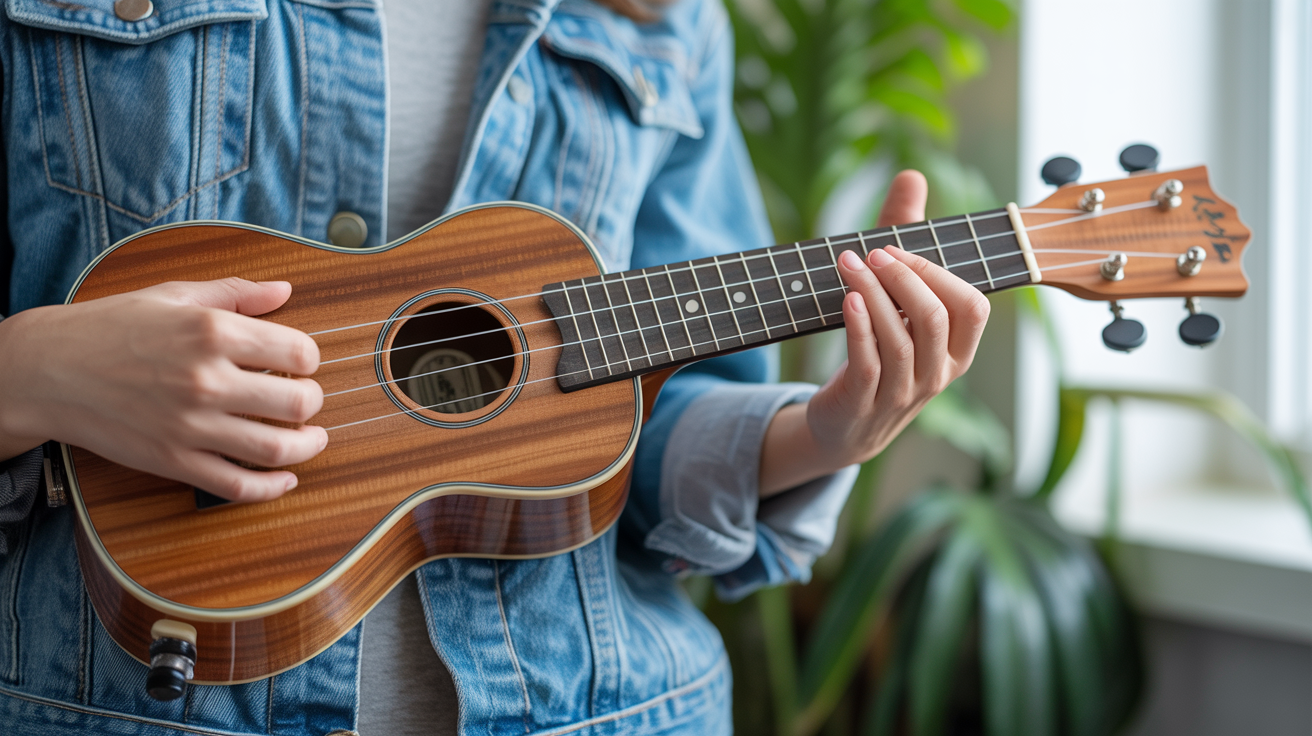
A few physical facts work in your favor right away.
Fewer strings. A standard ukulele has four nylon strings instead of the six steel strings on a guitar. That is two fewer notes to think about when you are learning to strum, and nylon is softer on fingertips.
Smaller fretboard. The neck is shorter and narrower, which means your fretting hand does not have to stretch as far to reach chords. Most common chords require only one or two fingers in the beginning.
Forgiving tuning. Standard ukulele tuning (G-C-E-A) puts the most common chords within easy reach. A C major chord, for example, is just one finger on one fret. You can play a recognizable song within your first session.
None of this means the ukulele teaches itself, but the physical barriers that stop many guitar beginners early (finger pain, chord shapes that require three fingers splayed across six strings) are much smaller here.
What You Can Realistically Expect in the First Month
Progress varies by how often you practice and whether you have any prior music experience, but here is a rough timeline most beginners land close to.
| Milestone | Rough Timeframe |
|---|---|
| Tune the ukulele and hold it comfortably | Day 1 |
| Play 2-3 basic chords cleanly | Week 1-2 |
| Switch between chords without long pauses | Week 2-4 |
| Play a simple song from start to finish | Week 3-6 |
| Add basic strumming patterns | Month 1-2 |
The sticking point for most beginners is not learning chords in isolation. It is building speed when switching between them. That feels clunky at first for everyone. The fix is slow, deliberate repetition rather than rushing through songs at full speed. A workable target for week two: hold each chord shape for a full four-count without the other strings buzzing, then add the change to the next chord on beat five. If that is still too fast, slow the count down rather than skipping ahead.
Even 15 minutes of focused practice per day moves the needle faster than a single 90-minute session once a week. That is not just an ukulele-teacher opinion, either. Research on motor-skill acquisition consistently finds that spacing practice across several short sessions produces better retention days and weeks later than packing the same total time into one long sitting.
Ukulele vs Guitar Difficulty
People often ask which is easier, and the honest comparison is that the ukulele has a lower floor and a different ceiling.
| Factor | Ukulele | Guitar |
|---|---|---|
| Strings | 4 nylon | 6 steel |
| First chord most people learn | C, 1 finger | Often 2-3 fingers |
| Fretting-hand stretch | Short, narrow neck | Longer, wider neck |
| Typical time to a first full song | 1-2 weeks | 3-6 weeks |
| Barre chords needed early on | Rare | Common (F, B) |
Getting your first song out of a ukulele typically happens faster. The chords require fewer fingers, the strings are softer, and the body is light enough that posture and arm fatigue are rarely issues early on.
Guitar, on the other hand, opens up more musical territory over time: barre chords, a wider tonal range, more genres that are built around it. Neither instrument is better; they suit different goals.
If you are drawn to ukulele specifically, that pull is reason enough. Players who start on an instrument they actually want to play tend to stick with it longer than those who choose based on which one is technically "easier."
Is It Harder If You Have No Music Background?
No prior music experience is needed. Most people who pick up the ukulele have never played an instrument before, and the basics are designed with that in mind.
A few concepts do come up that might feel unfamiliar at first: reading chord diagrams, understanding basic rhythm, and knowing how to tune by ear or with a clip-on tuner. None of these require formal music theory. They are practical skills you pick up as you go.
If you have played guitar or any stringed instrument before, you will find the transition even smoother. Some chord shapes carry over directly, and your fretting hand already knows how to press strings cleanly.
Check out the beginner's guide to getting started if you want a clear step-by-step path from day one.
Things That Actually Make It Feel Hard
Even though the ukulele is beginner-friendly, a few things trip people up.
Sore fingertips. Nylon strings are gentler than steel, but pressing strings against frets still takes some adjustment. What is actually happening is ordinary callus formation, the skin thickening in response to repeated pressure, something string players across every fretted instrument go through as a rite of passage. Most players develop calluses within two to three weeks of regular practice, and the discomfort fades. Short daily sessions (10 to 15 minutes) toughen fingertips faster than one long weekly session, because the skin needs the repeated, moderate stress rather than one big dose of it.
Chord transitions. As mentioned above, switching between chords smoothly is the main skill barrier. The muscle memory takes time, and that can feel frustrating if you expect to sound polished right away.
Staying in tune. Nylon strings drift more than steel, especially on a new ukulele, and a brand-new set of strings can take one to two weeks of daily retuning before it settles down and holds pitch reliably. A clip-on tuner solves this, and checking tuning before every session becomes second nature quickly.
Choosing the right size. Soprano, concert, tenor, and baritone ukuleles each have a different feel. Beginners who buy the wrong size sometimes assume the instrument is awkward when the real issue is fit. Read through ukulele sizes explained before you buy.
Posture and grip. Holding the ukulele correctly from the start prevents a lot of frustration. Players who develop a wobbly grip early tend to have more trouble as they add strumming patterns. See how to hold a ukulele correctly to get this right before bad habits form.
How to Make the Early Weeks Go Smoothly
A few practical habits keep beginners on track.
- Practice a little every day rather than in long, infrequent sessions. Ten to fifteen minutes daily consistently outperforms a single long weekend session.
- Learn two or three chords at a time, not a dozen at once. Trying to hold too many new shapes in your head at once slows down every one of them.
- Pick a song you actually want to play as a goal, not just scales. Motivation fades fast when practice feels disconnected from an actual song.
- Use a tuner every time you sit down, before you start. Playing on an out-of-tune instrument trains your ear to accept the wrong pitch.
- Record yourself occasionally so you can hear real progress. Weekly progress is hard to notice in the moment but obvious on playback.
None of these are complicated, but they make a noticeable difference in how quickly things click.
Frequently Asked Questions
How long does it take to learn the ukulele? Most beginners can play a simple song within four to six weeks of regular practice. Playing comfortably across multiple songs and strumming patterns typically takes three to six months. Advanced playing develops over years, just like any instrument, but the early wins come faster on ukulele than on most other stringed instruments.
Is ukulele hard to learn if you have never played music before? No. The ukulele is one of the more accessible instruments for complete beginners. Basic chords require one to three fingers, and the most common songs for beginners use three or four chords at most. You do not need to read sheet music or understand music theory to get started.
Does ukulele size affect how easy it is to learn? Yes, to a degree. Soprano ukuleles are the smallest and lightest, which suits younger players or people with smaller hands. Concert and tenor sizes have a bit more fret space, which some adult beginners find easier for chord transitions. Baritone is tuned differently and plays more like a guitar. For most adults starting out, concert is a comfortable middle ground.
Can you learn ukulele on your own without lessons? Many people do. There are reliable free resources online, and the ukulele community shares a lot of beginner-friendly material. Lessons, whether in person or video-based, can accelerate progress by catching technique problems early, but they are not required to reach a solid beginner level.
Is the ukulele worth learning if you eventually want to play guitar? It can be a reasonable stepping stone, especially for building chord muscle memory and getting comfortable with strumming rhythm. The chord shapes are different enough that you will still need to relearn positions on guitar, but the general habits of consistent practice and ear training carry over.
Do calluses hurt while they are forming, and is that normal? Mild tenderness in the first one to two weeks is normal and expected, not a sign you are doing something wrong. Sharp pain, numbness, or a callus that cracks and bleeds is not normal and usually means you are pressing far harder than needed or practicing for too long without breaks. Ease off, check your finger placement close to the fret wire, and let a day of rest into your schedule if a fingertip feels raw.
What if my fingers hurt too much to keep practicing? Short sessions with rest days between them beat pushing through pain. Ten minutes today, ten minutes tomorrow, and a day off later in the week will get you further than one grinding hour that leaves your fingertips too sore to touch a string for the next four days. If soreness lingers beyond two to three weeks of consistent light practice, it is worth checking your technique, since excessive pressure rather than the strings themselves is often the real cause.