Do Ukulele Beginners Really Need an Acoustic-Electric Model?
An acoustic electric ukulele adds a pickup and preamp for plugging in. Here is when that actually matters for a beginner, and when it is just extra cost.
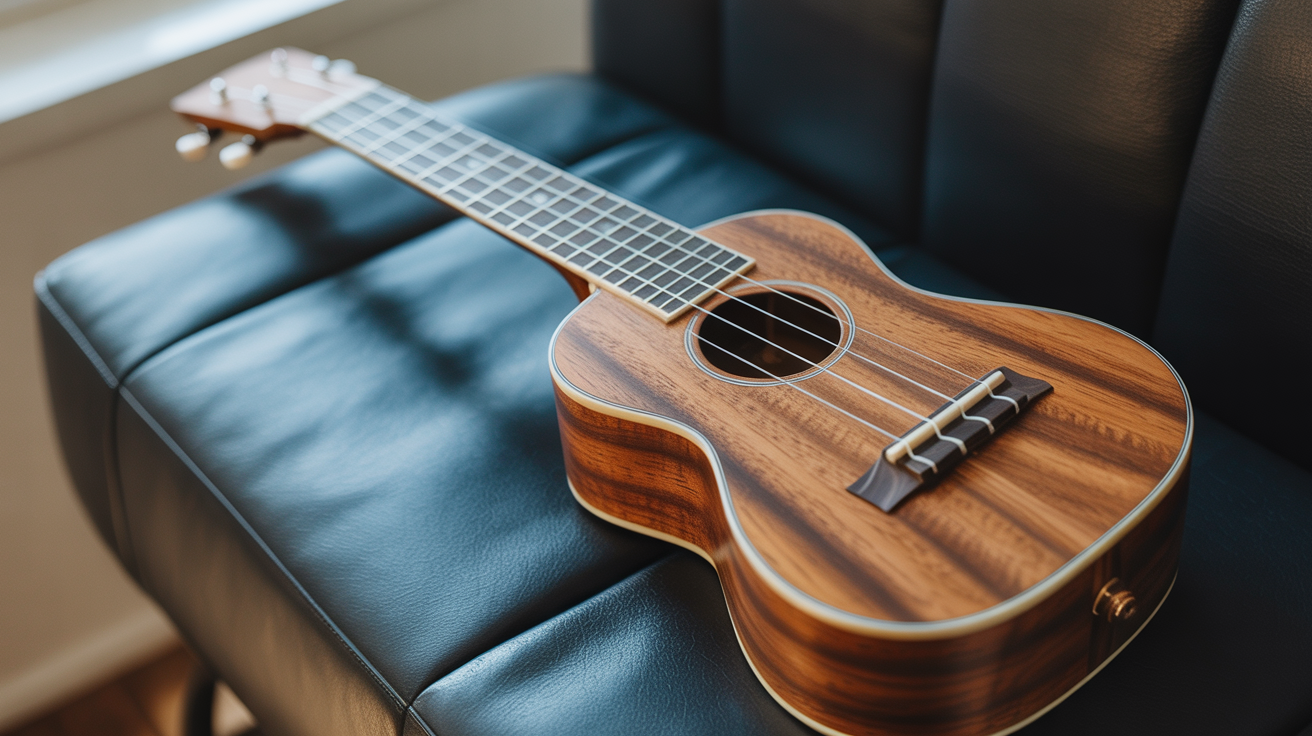
If you have been shopping for your first uke, you have probably noticed that a lot of models come in two versions: a plain acoustic and an "acoustic electric ukulele" that costs anywhere from twenty to eighty dollars more. The pitch sounds reasonable. Why not get the one that can plug in too, just in case? But "just in case" is doing a lot of work in that sentence, and for most beginners it is not a good reason to spend more money on day one.
Let's look at what you are actually buying, when it earns its keep, and when it just adds weight and battery upkeep to an instrument you are still learning to hold.
What an Acoustic-Electric Ukulele Actually Adds
Strip away the marketing and an acoustic-electric ukulele is just a regular acoustic ukulele with two extra parts bolted on: a pickup, usually a thin piezo strip under the saddle, and a preamp, a small circuit board mounted inside the body with a battery and a control panel poking out the side. That panel usually has a volume knob, tone or EQ controls, and sometimes a built-in tuner.
Plug a quarter-inch cable into the jack on the side, run it to an amp or a PA system, and the ukulele's sound comes through the speakers instead of relying on the body alone to project. That is the entire feature. It does not make the ukulele sound better acoustically, and in a few cases it makes almost no difference to unplugged tone at all, since the pickup and preamp just sit there doing nothing until you plug something in.
The battery, usually a 9-volt, only gets used when the unit is powered on for tuning or amplification. Left alone, it can sit for a year or more, but it is one more thing to remember to check before a gig, and a dead battery at the wrong moment is a real (if minor) annoyance.
When the Electronics Actually Earn Their Keep
There are a handful of situations where plugging in solves a real problem:
- Open mics and small stages. A ukulele is a quiet instrument. In a room with a PA and other musicians, an unamplified uke can vanish, even with a good singer over the top of it. A pickup lets a sound engineer send you through the speakers cleanly instead of pointing a microphone at your soundhole and hoping you do not move.
- Recording at home. Plugging directly into an audio interface gives you a clean, consistent signal without worrying about mic placement, room noise, or your neighbor's dog barking through take four. It is not always the best-sounding option (a good mic often captures more warmth), but it is the easiest.
- Jamming with louder instruments. If you regularly play alongside guitar, banjo, or a full band, a pickup can be the difference between being heard and just moving your fingers for show.
If any of those describe your actual, current situation, not a hypothetical future one, then acoustic-electric starts to make sense as a practical tool rather than an upsell.
When It Is Just Dead Weight
For the overwhelming majority of people picking up their first ukulele, none of the above applies yet. You are learning how to choose your first ukulele, figuring out where your fingers go, and building calluses. You are practicing on the couch, at the kitchen table, or on the porch, not in front of a PA system.
In that context, the electronics add:
- Extra weight and sometimes a slightly thicker body to house the preamp
- A battery compartment cut into the back or side of an otherwise simple instrument
- A control panel that can occasionally buzz or rattle if a screw works loose
- A higher price for a feature you will not touch for months, if ever
None of that helps you learn faster. It does not make chord changes easier or your strumming steadier. It is money spent on a capability you are not using yet, which is exactly the kind of thing to be cautious about when you are also trying to work out how much you should spend on a beginner ukulele in the first place.
You Can Add a Pickup Later, So You Are Not Locking Yourself Out
Here is the part that makes the "buy acoustic-electric just in case" argument weaker than it sounds: you do not have to decide now. A clip-on pickup or a soundhole pickup can be added to almost any acoustic ukulele later, usually for fifteen to forty dollars, with no permanent modification to the instrument.
- Clip-on pickups attach to the headstock or body edge and pick up vibration directly, no soldering or drilling required. You can move one between instruments.
- Soundhole pickups sit in the soundhole and stay in place with friction or a light clamp, again with no permanent changes.
Buying acoustic-only now and adding a pickup if and when you actually book an open mic slot keeps your options open without paying for them upfront. It is the same logic that applies when you are comparing ukulele brands and starter kits: spend on the things that affect how the instrument feels and sounds every single day (build quality, intonation, tuner reliability), and skip the features that only matter for a scenario that has not happened yet.
A Quick Way to Decide
| Your situation | Acoustic-electric worth it? |
|---|---|
| Learning at home, no plans to perform | No, save the money |
| Curious about performing "someday" but nothing booked | No, wait until you have an actual date |
| Already scheduled an open mic or small gig | Yes, or rent/borrow a pickup for that one event |
| Recording covers regularly for YouTube or social media | Maybe, though a clip-on mic often sounds just as good |
| Jamming weekly with guitar or banjo players | Yes, if volume is genuinely a problem |
| Want a built-in tuner and do not mind the extra cost | Reasonable, but a clip-on tuner does the same job for ten dollars |
If you land in the "no" rows, put the money toward a better strap, a proper set of extra strings, or the other ukulele accessories every beginner actually needs instead. Those items get used every single practice session, which is a much better return on a beginner's budget than electronics that might sit unused for a year.
The Bottom Line
An acoustic-electric ukulele is not a bad instrument, and if you already know you will be plugging in soon, it is a perfectly sensible purchase. But for most people starting out, the honest answer is that you do not need it yet. Start with a solid acoustic, learn your chords, build up your strumming, and let a real, specific need (an actual gig, an actual recording project) tell you when it is time to add a pickup. You will know it when it happens, and by then you will also know a lot more about what kind of amplification actually suits how you play.
Frequently Asked Questions
Does an acoustic-electric ukulele sound different unplugged compared to a regular acoustic?
Usually not by much. The pickup and preamp sit passively inside the body until you plug in, so the unplugged tone is close to a comparable acoustic-only model. Some players report a very slight difference in resonance because of the extra hardware and the cutout for the battery compartment, but it is subtle enough that most beginners will not notice it in normal playing.
Can I just use a microphone instead of buying an acoustic-electric ukulele?
Yes, and for recording at home a good microphone often captures a warmer, more natural tone than a piezo pickup. The tradeoff is that mics pick up room noise and require you to stay still relative to the mic, while a pickup gives you a clean signal no matter how you move. For live performance where a sound engineer is running the show, either can work depending on the venue.
How long does the battery last in an acoustic-electric ukulele?
Most preamps only draw power when the ukulele is plugged in or the built-in tuner is active, so a single 9-volt battery can last a year or longer under normal use. It is still worth checking before any performance, since a dead battery mid-set is a common and avoidable frustration.
Will adding a clip-on pickup later void my ukulele's warranty?
No. Clip-on and soundhole pickups attach without drilling, soldering, or any permanent modification, so they do not affect a standard manufacturer's warranty. Always check your specific instrument's warranty terms, but external pickups are designed to be a non-invasive addition.
Is a built-in tuner a good reason to choose acoustic-electric?
It is convenient, but not essential. A basic clip-on tuner costs around ten dollars, works on any ukulele, and is just as accurate as most built-in preamp tuners. If the built-in tuner is the only feature drawing you toward an acoustic-electric model, a standalone tuner gets you the same convenience for a fraction of the price difference.