Ukulele Care 101: Humidity, Storage, and Cleaning
Keep your ukulele sounding great with simple routines for humidity control, safe storage, and cleaning. No experience needed.
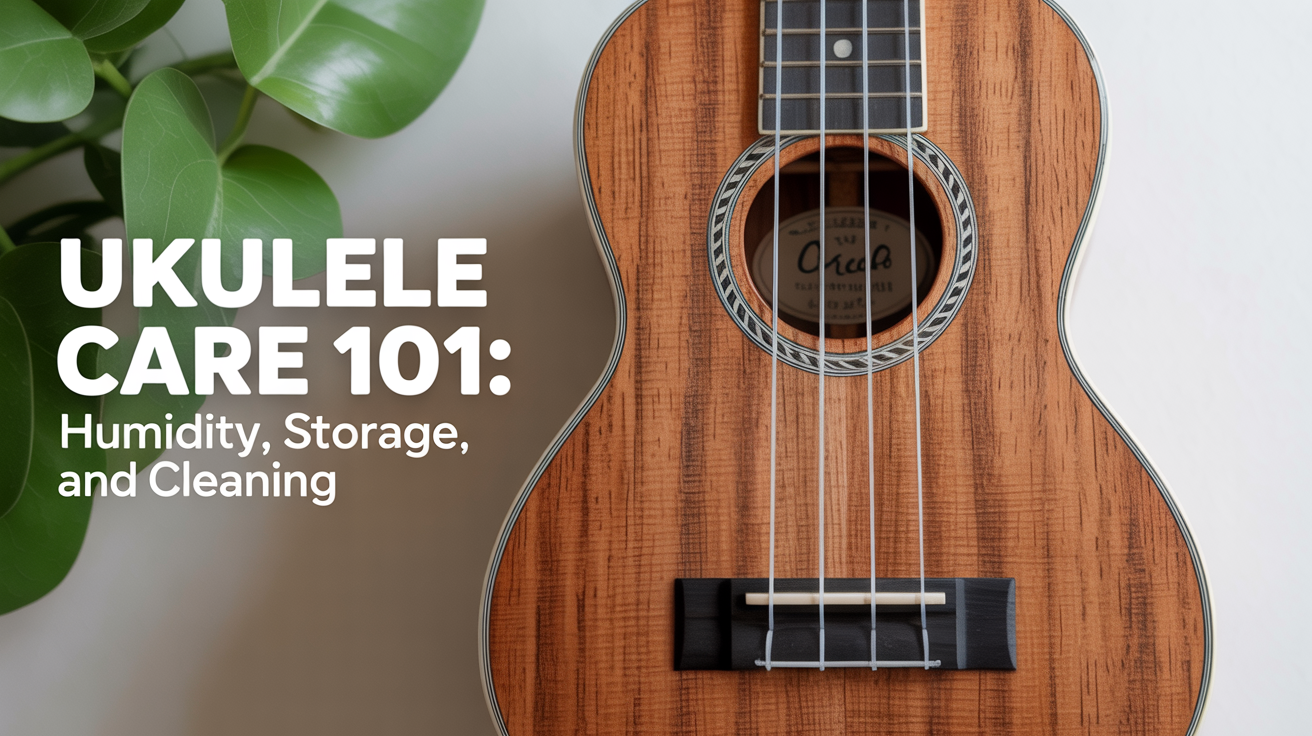
A ukulele does not need a lot of attention to stay in good shape, but the basics matter. Proper humidity, safe storage, and light cleaning keep the wood stable, the strings bright, and the instrument playing comfortably for years. Here is what you actually need to know.
Why Humidity Is the Biggest Factor in Ukulele Care
Wood moves. When the air dries out, wood contracts. When the air gets humid, it swells. For a solid-wood ukulele, those small movements can open glue joints, crack the top, or cause the neck to shift. Laminate ukuleles (very common in beginner instruments) are more forgiving, but they still benefit from a stable environment.
The target range is 45 to 55 percent relative humidity. You can buy a small digital hygrometer for a few dollars to track the humidity in the room where you keep your instrument. Most inexpensive ones are accurate enough for this purpose.
What Happens When Humidity Drops Too Low
Dry air below about 40 percent relative humidity is the main threat. Signs of a ukulele that has dried out include:
- Fret ends that feel sharp or poky along the sides of the neck
- A slight drop in the action (string height) as the top sucks inward
- Hairline cracks, usually along the grain on the top or back
If you live in a dry climate or run forced-air heat in winter, consider a small room humidifier near your instrument storage area. In-case humidifiers are another option; they sit inside a closed case and release moisture slowly.
What Happens When Humidity Gets Too High
Excess moisture above about 65 percent causes swelling, which can raise the action uncomfortably and soften the glue in the joints. If you live somewhere very humid, a dehumidifier or climate control helps. At minimum, keep the ukulele out of rooms that get damp, like basements or bathrooms.
How to Store a Ukulele Safely
Where and how you store your ukulele between practice sessions has a real effect on its condition over time.
Case vs. Wall Hook vs. Stand
Each storage method has tradeoffs:
| Option | Protection | Humidity Control | Accessibility |
|---|---|---|---|
| Hard case | Excellent | Good (closed case) | Lower |
| Gig bag | Good | Moderate | Easy |
| Wall hook | Low | None | Very easy |
| Floor stand | Low | None | Very easy |
Hard cases offer the best protection from drops and humidity swings. If you play regularly and just want to keep the ukulele accessible, a floor stand in a room with stable climate is fine. Wall hooks work well too, as long as the ukulele is away from exterior walls, heating vents, and direct sunlight.
Spots to Avoid
- Direct sunlight: UV fades the finish and heat builds up fast near windows
- Near a heating vent or radiator: dries out wood quickly
- Inside a car: temperatures can swing dramatically and cause real damage
- A basement or garage without climate control: humidity is unpredictable
If you plan to store the instrument for more than a few weeks, a case is the right call. Detune the strings slightly to take tension off the neck during long storage, then tune back up when you are ready to play again.
Cleaning Your Ukulele
Cleaning does not need to be complicated. The main goal is removing oils, sweat, and dust before they build up on the frets or dull the finish.
After Each Practice Session
Wipe down the strings and the back of the neck with a soft, dry cloth after you play. Your fingertips leave oils on the strings that accelerate corrosion, especially on unwound nylon strings. This thirty-second habit extends string life noticeably.
Cleaning the Body
For light dust and smudges, a dry microfiber cloth is all you need. For grease or heavier buildup, slightly dampen the cloth with water and wipe gently, then follow with a dry cloth to remove any moisture.
Avoid:
- Spray cleaners unless they are specifically made for guitar or ukulele finishes
- Paper towels (too abrasive for some finishes)
- Furniture polish or silicone-based products
- Alcohol, which can strip or cloud lacquer finishes
Always follow the manufacturer's instructions for your specific instrument, as finish types vary.
Cleaning the Fretboard
Unfinished rosewood or ebony fretboards (common on mid-range ukuleles) can be wiped with a very slightly damp cloth. Once a year or so, a small amount of fretboard conditioner keeps the wood from drying out. For maple or other finished fretboards, just wipe with a dry cloth; they do not need conditioning.
Polishing the Finish
Many beginner ukuleles have a gloss finish that shows fingerprints. A dedicated instrument polish applied with a microfiber cloth once a month or so keeps it looking clean. A little goes a long way. Avoid getting polish on the fretboard.
String Maintenance and When to Replace
Strings affect tone and playability more than almost anything else. Old strings go dull and can hold tuning poorly.
Most players find that changing strings every three to six months is a good rhythm for regular practice. If you play a lot, more often. If the strings look discolored or feel rough, it is time. New strings make the ukulele feel like a fresh instrument.
In the meantime, keeping your hands clean before playing reduces the oils that degrade strings faster. Washing your hands before a session is one of the simplest habits you can build into your daily practice routine.
Quick-Reference Care Checklist
Here is a condensed version to keep in mind:
- After each session: Wipe strings and neck with a dry cloth
- Weekly: Check that storage spot is away from heat, sun, and moisture
- Monthly: Light polish on the body if needed; check fret ends for sharpness
- Seasonally: Monitor humidity, especially in winter or very humid summers
- Every 3 to 6 months: Consider changing strings
- Annually: Condition the fretboard if it is unfinished wood
Frequently Asked Questions
Do I need a humidifier for a laminate ukulele?
Laminate instruments are more stable than solid wood because the layers cross-grain construction resists movement. You do not need to be as careful, but extreme dryness can still affect the glue joints and finish over time. If you live in a very dry climate, a moderately humidified room is still better than very dry air.
Can I leave my ukulele on a stand all the time?
Yes, many players do this because it makes the instrument easy to grab and play. The tradeoff is that it offers no protection from humidity swings, dust, or accidental bumps. If your home has stable climate and you play regularly, a stand is perfectly fine.
My fret ends feel sharp. Is that a humidity problem?
Often, yes. When wood dries out, the fretboard shrinks slightly along its width while the metal frets do not, leaving the ends sticking out. Bringing the humidity up to the 45 to 55 percent range sometimes helps over time. If the sharpness is severe, a guitar shop can file the fret ends smooth in a short appointment.
How do I know when to change my strings?
A few reliable signs: the strings look dull or slightly discolored, they no longer hold tune as well as they used to, or the tone sounds flat and lifeless compared to when they were new. When in doubt, a fresh set of strings is inexpensive and makes a bigger difference than most players expect.
Is it okay to store a ukulele in a gig bag instead of a hard case?
A gig bag is fine for most situations. It protects against dust, minor humidity swings, and light bumps. A hard case offers more protection against impacts and does a better job maintaining a stable environment inside. If you travel frequently or live somewhere with wide humidity swings, a hard case is worth the investment.