How to Change Ukulele Strings Step by Step
Learn how to change ukulele strings with this beginner-friendly guide covering bridge types, winding, stretching, and tuning tips.
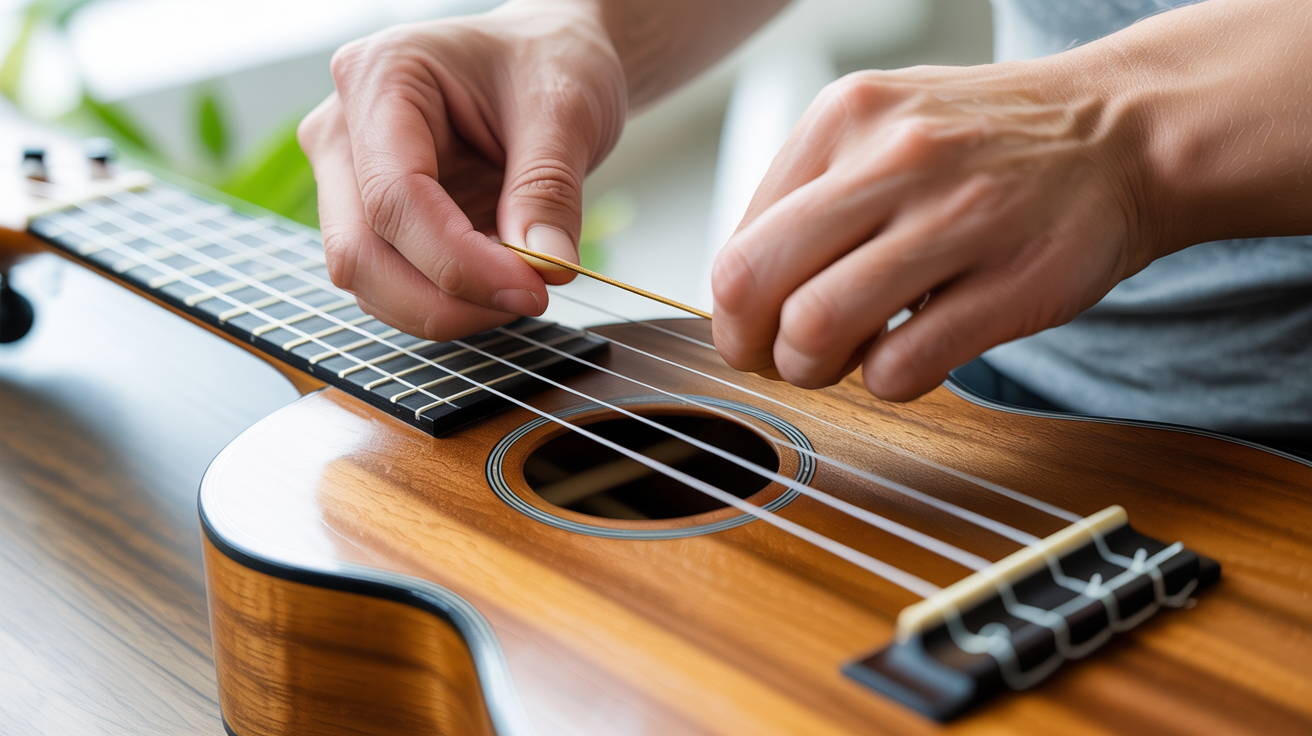
Changing your ukulele strings is one of the most useful skills you can pick up as a player. Fresh strings make a real difference, better tone, better tuning stability, and just a nicer feel under your fingers. The whole process takes about 20 minutes once you know what you're doing, and this guide will walk you through it start to finish.
When Should You Change Your Strings?
Strings don't last forever. Over time they absorb oils from your skin, stretch unevenly, and simply wear out. Here are the signs it's time for a fresh set:
- Dull or muted tone. New strings have a bright, clear ring. When your uke sounds flat and lifeless even right after tuning, the strings are usually the culprit.
- Fraying or visible wear. Check the frets and the saddle area. Any fraying, flat spots, or discoloration means the string is on borrowed time.
- Constant tuning problems. If a string just won't hold pitch, even after you've stretched it and played for a while, it's past its useful life.
- Switching string types. Moving from nylon to fluorocarbon (or vice versa) means a full replacement regardless of age.
How often you change strings depends on how much you play. A few times a week? Every three to six months is a reasonable target. Daily players often go more frequently. There's no strict rule, trust your ears.
What You'll Need
Nothing fancy required:
- A new set of ukulele strings (matched to your uke's size, soprano, concert, tenor, or baritone)
- A tuner (clip-on or app-based both work fine)
- Small wire cutters or nail scissors
- A few minutes of patience
That's it. Some players keep a pencil on hand to rub graphite into the nut slots, which helps strings slide smoothly when tuning. Optional, but handy.
Know Your Bridge Type Before You Start
Before you remove anything, look at the bridge, the piece of wood at the bottom of the soundboard where the strings attach. There are two common types, and they require slightly different techniques.
Tie-Bar Bridge
This is the most common style on soprano, concert, and tenor ukuleles. It looks like a small rectangular bar of wood. The strings pass through holes beneath the bar or tie directly around it.
To attach a string: thread the end through the hole from the soundhole side, bring it back over the top of the bridge, loop it under itself once or twice, and tuck the tail under the loop before pulling snug. The knot should lock against the bridge without slipping. Give it a gentle tug to confirm it's secure before moving to the headstock.
Slotted or Notched Bridge
Some ukuleles use a slotted bridge, the string end sits in a groove cut into the bridge plate, held in place by a simple overhand knot tied at the end of the string. You tie the knot, drop the string into the slot, and the knot catches on the back edge. Straightforward, and it holds reliably.
If you're unsure which type you have, a quick look at the bridge will tell you. Slots or grooves = slotted. Plain holes with a bar = tie-bar.
Step-by-Step: How to Restring a Ukulele
It helps to change one string at a time rather than removing all four at once. That way the bridge stays under some tension and the nut doesn't shift. Work your way from string to string: detach the old string, attach the new one, wind it up, and move on.
Standard ukulele tuning is gCEA, from the fourth string (closest to the ceiling when you're playing) down to the first string (closest to the floor).
-
Loosen the old string. Turn the tuner peg until the string goes slack. Most headstocks have the pegs on the sides, so turning toward you loosens the string. Take it slow, no need to rush.
-
Remove the string from the bridge. For a tie-bar bridge, loosen the knot and pull the string free. For a slotted bridge, lift the string out of the groove and untie the end knot. Old strings can be stiff; work carefully to avoid scratching the finish.
-
Pull the string free from the tuner post. Once it's loose, unwind it from the peg and set it aside.
-
Attach the new string at the bridge. Follow the appropriate method for your bridge type (see above). Take your time with the tie-bar knot, it's the trickiest part, but once you've done it twice, it becomes second nature.
-
Thread the string through the tuner hole. Run the string up the neck and through the small hole in the tuner post. Pull it snug so there's about 2–3 cm of slack, you want a few winds on the post, not too many.
-
Wind the string onto the post. Hold light tension on the string with one hand while turning the peg with the other. Wind toward the center of the headstock. The string should wrap neatly, with each coil sitting below the previous one. Aim for three to five winds.
-
Bring the string up to rough pitch. Don't go all the way to tension yet, just get it in the ballpark. You'll stretch and re-tune shortly.
-
Repeat for each string. Work through all four, one at a time.
-
Trim the excess. Once all four strings are wound, clip the tails sticking out of the tuner posts close to the peg. Leave just a few millimeters so the end doesn't unravel.
-
Stretch the strings and tune. This is the step most beginners skip, and it's why new strings go out of tune so fast. Grip each string gently in the middle and pull it away from the fretboard, not hard, just a firm, even pull. Retune. Pull again. Retune again. Do this four or five times per string. The strings will settle much faster if you stretch them properly now.
For detailed help getting your tuning accurate, check out our guide on how to tune a ukulele and stay in tune.
What to Expect After Restringing
New strings go flat. A lot. This is completely normal, nylon and fluorocarbon strings both stretch as they break in, and that process takes a few days of regular playing. Tune up before every practice session and the strings will stabilize faster.
Fluorocarbon strings generally settle a bit quicker than nylon and hold pitch a little better in humid or dry conditions. Nylon tends to have a warmer, rounder sound. Which material you prefer is personal, both are perfectly fine for a beginner.
By day three or four, you'll notice the strings holding their pitch much more reliably. By the end of the first week, they should feel and behave like they've been on for a while. Patience helps here. If you want to speed things up, play a little more, every session stretches the strings further.
Building good maintenance habits pairs well with building good playing habits. For ideas on how to use your practice time well, see our article on a short effective daily ukulele practice routine.
A Note on String Tension and Your Fingers
Fresh strings sometimes feel a bit rough or stiff for the first day or two. If your fingertips feel sore after a restringing session, that's normal. New strings can also have slightly more resistance than broken-in ones. This will pass quickly. If you find your fingers tiring out faster than usual, take shorter practice sessions until the strings soften up. Our guide on how to build finger strength without sore hands has some useful tips for managing that adjustment period.
FAQ
How long do ukulele strings last?
It depends on how often you play and how much your hands sweat. Light players might get six months to a year from a set. Someone playing daily might swap strings every two to three months. When the tone goes dull or tuning gets unpredictable, it's time.
Can I reuse old strings?
Technically yes, but it's rarely worth it. Old strings have already stretched and fatigued, so they won't intonate as accurately and won't hold pitch as well as a fresh set. A new set of strings is inexpensive enough that reusing old ones is more hassle than it's worth.
My new strings keep going flat, did I do something wrong?
Almost certainly not. New strings stretch, and that's completely normal. Stretch them by hand (gently pulling each string away from the fretboard), retune, and repeat several times after you first put them on. Play regularly over the next few days and retune before each session. Within a week they should stabilize.
Do I need to change all four strings at once?
You don't have to, but it's usually a good idea. If one string is clearly worn out, the others are probably close behind. Mixing an old string with three new ones can create tonal imbalance and uneven feel. Changing all four at once gives you a consistent result.
What's the difference between nylon and fluorocarbon strings?
Nylon strings are the traditional choice, warm, forgiving under the fingers, and easy to find. Fluorocarbon strings are denser and tend to project a bit more clearly, with a slightly brighter tone. They also break in faster and can be a little more stable in changing humidity. Either works well for a beginner. Try both at some point and see which sound you prefer.