How to Build Finger Strength Without Sore Hands
Build ukulele finger strength gradually with these exercises and habits—so you play more and hurt less, even as a complete beginner.
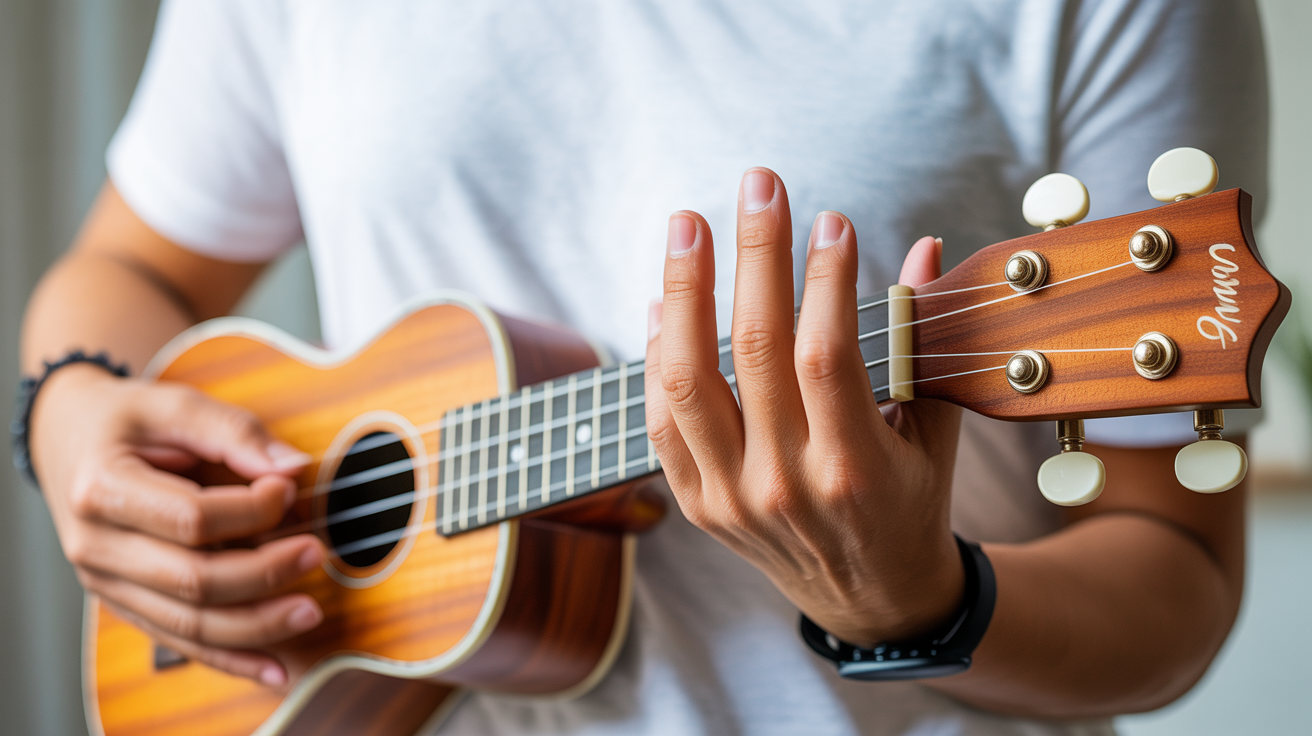
Sore fingertips are one of the first things new ukulele players run into, and it stops a lot of people in their tracks. The good news is that the discomfort is almost always temporary, and there are specific things you can do to build strength and endurance without grinding through pain. Short, focused sessions beat marathon practice every single time.
Why Your Fingers Get Sore (and What Actually Fixes It)
When you press a string against a fret, you're applying sustained pressure to soft tissue that isn't used to it. That tenderness you feel after 20 minutes is your fingertips adapting. Over a couple of weeks of consistent practice, light calluses form at the contact points, and the soreness mostly disappears.
The ukulele has a real advantage here: its strings are nylon or fluorocarbon, noticeably softer under the fingers than the steel strings on an acoustic guitar. Most players find the adaptation period shorter and less painful on uke.
What doesn't help is playing through sharp or aching joint pain. Fingertip tenderness is normal and fades. Pain in your knuckles, wrist, or the palm side of your hand is a signal to stop, rest, and if it persists, see a professional before continuing. That's not being overly cautious; it's just common sense.
The habits that make the biggest difference
- Keep sessions short and frequent. Fifteen minutes twice a day builds calluses and strength faster than a 90-minute session once a week, and leaves you much less sore.
- Use only enough pressure to get a clean note. Many beginners grip hard out of anxiety. Find the minimum pressure that clears the fret cleanly and stick with it.
- Keep your wrist fairly straight. A bent or kinked wrist puts extra strain on tendons. Adjust the angle of the uke's neck so your fretting hand can stay relaxed.
- Warm up before you play. A minute or two of gentle finger rolls and wrist circles gets blood moving and makes the whole session feel easier.
- Take short breaks mid-session. If you've been playing for 20 minutes, set the uke down, shake your hands loose, and give it a minute before continuing.
Ukulele Finger Exercises That Actually Work
These drills target the specific weaknesses beginners have: independent finger movement, even pressure across all four fingers, and the ability to switch positions cleanly. None of them require strength in the gym sense. What you're really building is coordination and muscle memory.
The chromatic crawl
This is the most consistently recommended beginner finger exercise. Place one finger on each of the first four frets of the g string (the top string in standard gCEA tuning). Pluck each note in order, frets 1 through 4, then move the whole pattern up one fret and repeat. Continue up the neck until you run out of room, then come back down.
Do this on all four strings. Go slowly. The goal isn't speed; it's getting each finger to press cleanly and release fully before the next one moves. Rushing kills the independence benefit.
Slow chord changes
Pick two chords (C and Am are a good starting pair) and set a timer for 60 seconds. Do nothing but switch between them, as slowly as you need to land each shape cleanly. Count how many clean changes you make. Over the following weeks, that number will climb.
This is a strength exercise in disguise. Holding a chord shape for even a second or two against real string resistance builds the exact muscles and calluses you need, and the deliberate slowness forces you to notice which fingers arrive late or press too hard.
The spider drill
This one isolates finger independence. On any single string, place fingers in this sequence: 1-2, 1-3, 1-4, 2-3, 2-4, 3-4. Hold finger 1 down while adding finger 2, then release 2 and add 3, and so on. It's a little awkward at first, and that awkwardness is the point. The ring finger (3) and pinky (4) are almost always the weakest and least independent, so the drill gives them specific work.
Don't rush. A slow, clean spider drill for five minutes does more than a sloppy one for twenty.
One-finger chord fragments
If full chord shapes are painful right now, break them down. A C chord on uke uses just one finger on the third fret of the A string. A G chord uses three, but you can start by pressing just the first finger until it's easy. Building up shapes one finger at a time lets your fingertips adapt at a pace you control.
Building a Strength Routine That Fits Real Life
You don't need a dedicated workout block. These exercises work best woven into your regular practice. A simple structure many beginners find helpful:
- Two minutes of wrist circles and finger stretches before picking up the uke.
- Five minutes of the chromatic crawl across all four strings, staying slow.
- Your actual practice material (songs, chords, or strumming patterns you're working on).
- Two to three slow chord changes at the end, focusing on the transitions that gave you the most trouble.
That's a 15-20 minute session. It's short enough to do most days and consistent enough to build real progress. A daily ukulele practice routine you actually stick to will always beat a longer one you only manage twice a week.
When to push through and when to stop
Fingertip soreness, mild burning, and the rubbery feeling in your hand after a session are all normal. Sharp pain, numbness, or tingling that runs into your wrist or arm is not. Neither is pain that gets worse as the session continues. Those are signals to stop for the day.
If you're consistently sore in your joints rather than your fingertips, check your technique first. Neck angle, wrist position, and grip pressure account for most technique-related pain in beginners. If adjusting those doesn't help and the pain persists across several sessions, take a full week off and speak to a professional before picking up the uke again.
Do You Get Calluses From Playing Ukulele?
Yes, though they're lighter than what guitarists develop. Because nylon and fluorocarbon strings are softer, the calluses tend to be subtle. You may not notice obvious hardened patches; you'll just notice that the tenderness stops.
The timeline varies. Some players feel noticeably better after one week. Others take closer to a month if they're playing infrequently or have particularly sensitive skin. Consistent short sessions speed the process considerably.
A few things can slow callus development: moisturizers applied right before playing, long gaps away from the instrument, and soaking your hands all soften the skin. None of this is a reason to change your daily habits. It's just useful to know if progress feels inconsistent.
Putting It Together: Your First Month
The first four weeks are when most of the fingertip adaptation happens. Here's a realistic picture of what it tends to look like:
- Week 1: Fingertips are tender after 10-15 minutes. Keep sessions short, do the chromatic crawl, take breaks.
- Week 2: Tenderness arrives later in the session. Chord shapes start landing more consistently as muscle memory builds.
- Week 3: Many players start feeling comfortable playing for 25-30 minutes. Chord changes feel less deliberate.
- Week 4: Fingertips are mostly adapted. You can start extending sessions and adding complexity.
None of this requires pain; it requires patience and regularity. If you're also working on tuning your uke and keeping your strings in good shape, the whole process is easier. Old strings go dull and feel rougher under the fingers. Changing them at the first sign of dullness is a small thing that makes a real difference.
FAQ
How long until my fingers stop hurting from ukulele?
For most beginners, fingertip tenderness fades noticeably within two to three weeks of regular short sessions. Playing for 10-15 minutes most days is more effective than occasional longer sessions. The key is consistency, not duration.
Is it normal to have really sore fingertips when starting ukulele?
Yes, very common. The skin on your fingertips isn't used to pressing strings, and it takes time to build the light calluses that protect you. What's not normal is sharp joint pain, wrist pain, or numbness. Those are worth taking seriously and may warrant a break or a conversation with a professional.
Should I practice through the soreness or rest?
Practice through fingertip tenderness in short sessions; that's how calluses develop. Rest if you feel joint pain, wrist pain, or if your fingers are so sore that you're compensating by changing your technique. Practicing with bad technique to avoid pain usually creates worse problems down the road.
Can ukulele finger exercises help me progress faster overall?
The chromatic crawl and spider drills do more than build strength. They develop finger independence, which directly helps with chord changes and fingerpicking patterns. Players who add even five minutes of deliberate exercises tend to make faster overall progress than those who only practice songs.
Do I need special hand strengthener gadgets to play ukulele?
No. The exercises described above, done slowly and consistently on the actual instrument, are more effective and more specific than grip strengtheners or squeeze balls. Your fingers adapt to the exact movements playing requires; generic grip tools don't replicate that.